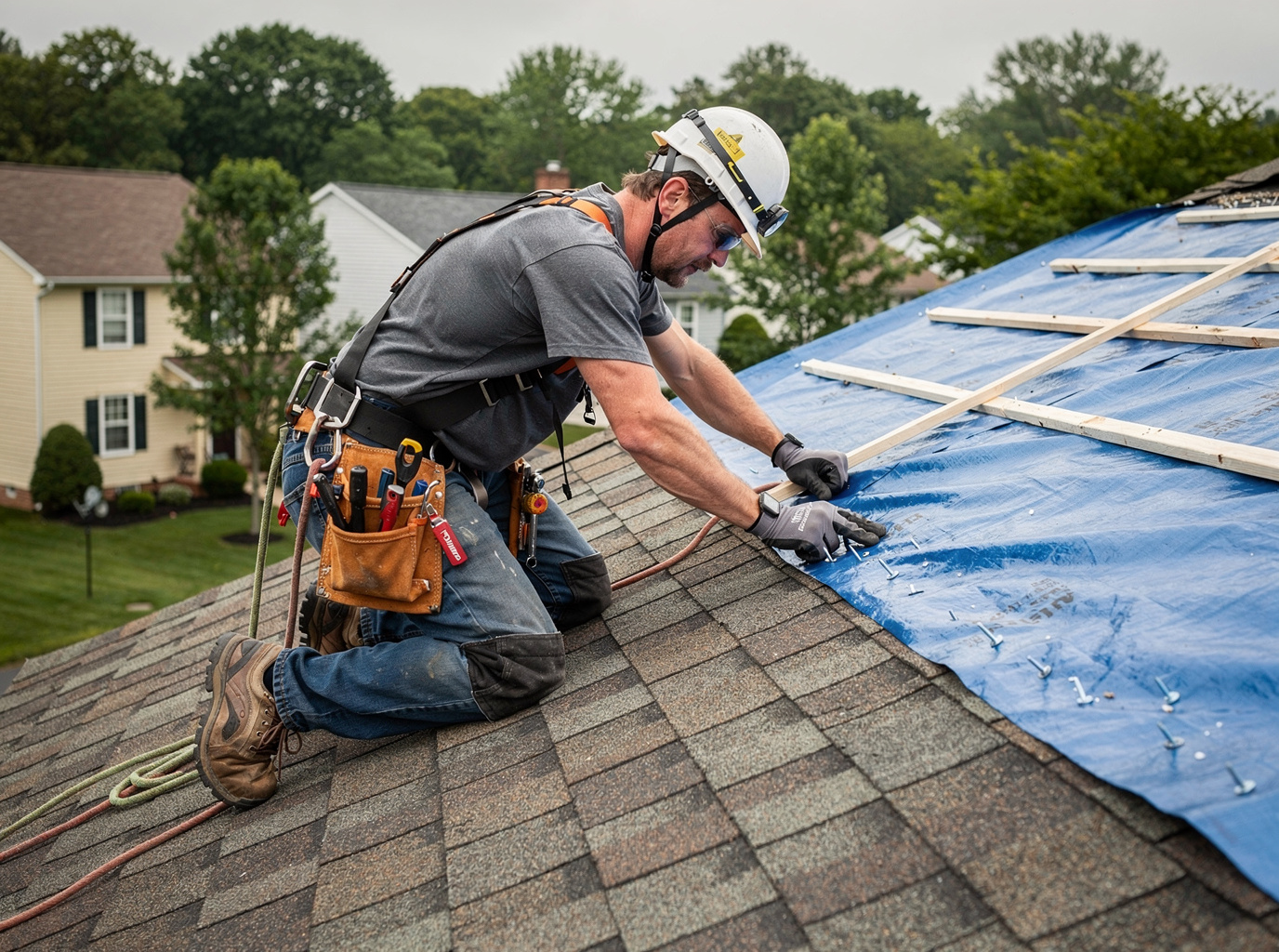
Frederick homes built before 1950 in the Historic District and Wormans Mill often feature steep slate or cedar roofs that catch wind-driven rain during humid subtropical summers. When shingles lift or flashings fail, tarping prevents interior water damage that can spread quickly through balloon-framed walls common in Clover Hill. Crews use reinforced polyethylene sheets rated for 60 mph gusts and secure them with furring strips and masonry anchors that respect the brick and stone exteriors found downtown.
Cool winter temperatures in Frederick County make temporary coverings essential after ice dams or fallen limbs tear underlayment. Tarps must be installed with enough overlap and slope to shed snow load without pooling, which can add hundreds of pounds to older trusses. Local crews check attic ventilation and existing leaks before covering so condensation does not form under the plastic during temperature swings between day and night.
Ballenger Creek neighborhoods sit on rolling terrain that funnels runoff toward foundations; a poorly tensioned tarp can channel water directly against siding or into basement windows. Proper edge sealing with butyl tape and drip edges directs flow to gutters instead. Homeowners in these areas also request tarping ahead of forecasted heavy rain when replacement scheduling stretches into weeks.
Technician insight
In Frederick, the thing that catches most people out with Roof Tarping is the combination of steep historic roofs and our humid summers that make even well-secured tarps shift after a week of afternoon thunderstorms if the furring strips are not nailed into solid sheathing.
Roof Tarping Services We Offer
✓Emergency Roof Tarping
Covers active leaks on Frederick homes after wind or hail events so interior damage stays contained until full repairs begin.
✓Storm Damage Tarping
Secures roofs hit by Frederick County thunderstorms using heavy-duty material that withstands repeated summer downpours.
✓Historic District Roof Tarping
Protects slate and cedar roofs in the Frederick Historic District with non-penetrating anchors that avoid damaging original masonry.
✓Seasonal Leak Prevention Tarping
Applies temporary covers on aging Wormans Mill and Clover Hill roofs before winter freeze-thaw cycles widen existing gaps.
✓Wind Uplift Tarping
Reinforces edges and ridges on exposed Ballenger Creek homes where prevailing winds lift shingles during coastal storms tracking inland from Baltimore.
How it works
- 1
Site Assessment
Technician inspects the roof from the ground and attic to locate all breach points and note slope, material, and nearby obstructions.
- 2
Material Selection
Crew chooses reinforced tarp weight and anchoring system based on roof pitch and expected weather exposure in Frederick County.
- 3
Secure Installation
Sheets are positioned with proper overlap, fastened along eaves and ridges, and sealed at flashings to direct water away from walls.
- 4
Final Walk-Through
Homeowner reviews the covered areas and receives instructions on monitoring the tarp until permanent roofing work starts.
Pricing
Depends on roof size and damage