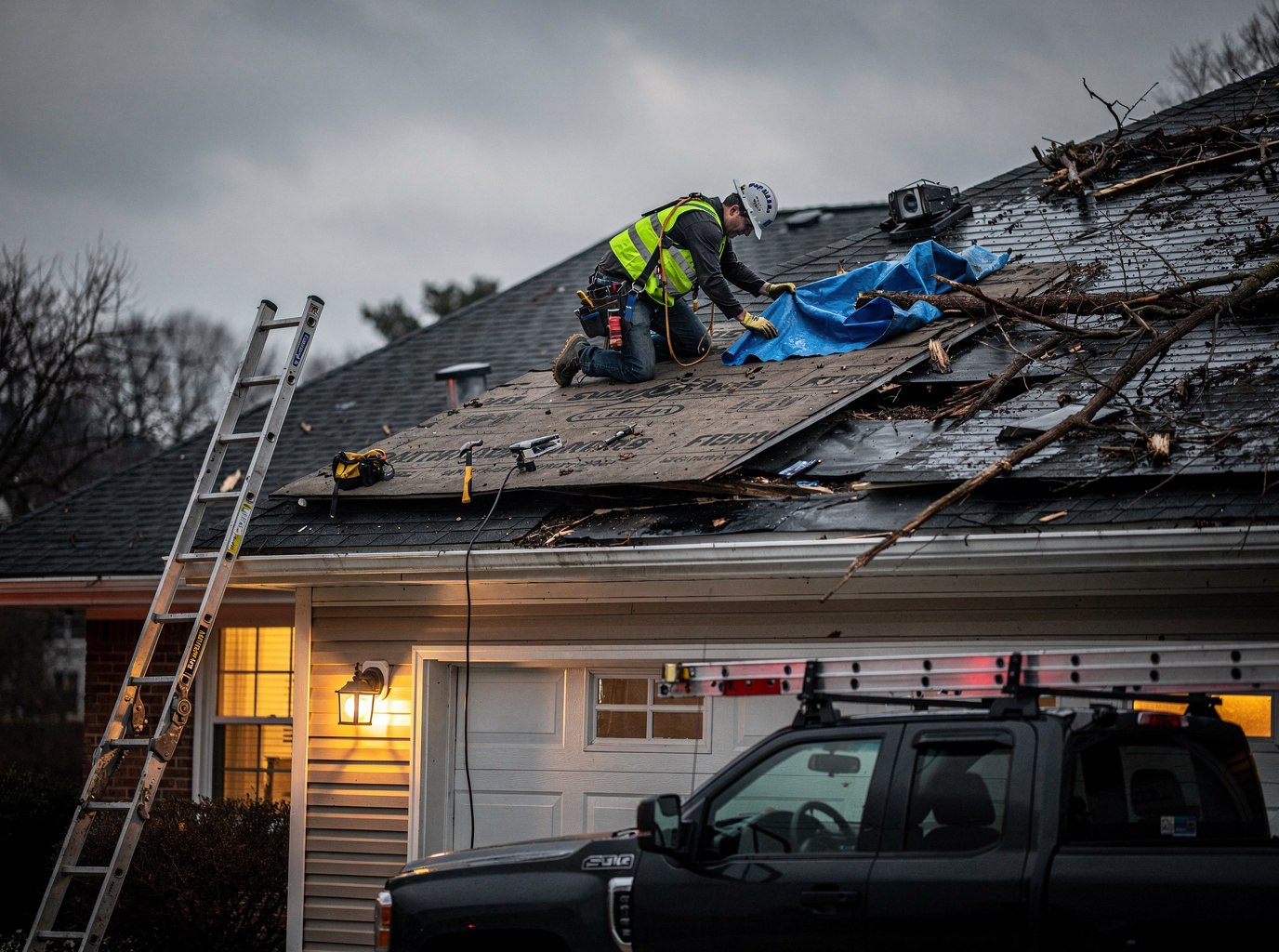
Frederick County homes range from 19th-century structures in the Historic District to mid-century builds in Wormans Mill and newer construction in Clover Hill. Hot humid summers followed by freeze-thaw cycles in winter push asphalt shingles, slate and metal flashing to their limits. Emergency calls often trace to wind-driven rain under lifted edges or ice dams that form along north-facing slopes near Baker Park.
When water enters, it travels along rafters and can pool above interior ceilings within hours. Local crews check for compromised underlayment, failed step flashing at chimneys, and deteriorated valley liners common on homes built before updated county codes. Temporary measures focus on keeping interior finishes dry until permanent materials match the existing roof system.
This site arranges service through local, independently owned companies. When you call, the company that serves your ZIP code answers, gives you a written estimate and does the work. That company pays us a fee for the call. We do not perform, supervise or guarantee the work. Hours are Mon–Sat 7am–7pm with storm-damage calls answered 24/7.
Technician insight
In Frederick the thing that catches most people out with Emergency Roof Repair is how quickly water travels under the older slate and asphalt layers found in the Historic District once a single valley or chimney flashing fails during a summer thunderstorm.
Emergency Roof Repair Services We Offer
✓Storm Damage Patching
Targeted replacement of lifted or torn shingles after high winds common along the Frederick County ridge lines.
✓Active Leak Containment
Rapid sealing of interior water entry points while preserving original roof layers in Ballenger Creek split-levels.
✓Flashing and Valley Repair
Replacement of corroded step and counter flashing around chimneys and skylights typical on Wormans Mill colonials.
✓Temporary Roof Tarping
Secure covering of exposed decking to protect homes in the Historic District until full material replacement can occur.
✓Gutter and Downspout Integration
Reattachment and sealing of gutters pulled away by ice or debris, preventing further wall saturation near Clover Hill.
How it works
- 1
Initial Assessment
Technician inspects exterior and attic to locate entry points and evaluate roof age and material condition.
- 2
Temporary Stabilization
Apply tarps or sealants to stop active water intrusion and protect interior finishes.
- 3
Permanent Material Match
Replace damaged sections using matching shingles or slate while addressing underlying deck and underlayment issues.
- 4
Final Walkthrough
Review completed work from both attic and roof level to confirm no remaining pathways for water.
Pricing
Depends on damage extent